-
Table of Contents
- Metabolites of Tamoxifen and Their Activity
- Metabolism of Tamoxifen
- Endoxifen: The Most Active Metabolite
- 4-Hydroxytamoxifen: A Potent Anti-Estrogen
- N-Desmethyltamoxifen: A Potential Contributor to Tamoxifen’s Activity
- Pharmacokinetic/Pharmacodynamic Considerations
- Real-World Examples
- Conclusion
- Expert Comments
Metabolites of Tamoxifen and Their Activity
Tamoxifen is a selective estrogen receptor modulator (SERM) that has been used for decades in the treatment of breast cancer. However, its use has extended beyond cancer treatment, with its potential benefits in sports pharmacology being explored. One of the key factors that contribute to the effectiveness of tamoxifen is its metabolism, which results in the formation of various metabolites with different activities. In this article, we will delve into the different metabolites of tamoxifen and their activity, providing a comprehensive understanding of this important aspect of tamoxifen’s pharmacology.
Metabolism of Tamoxifen
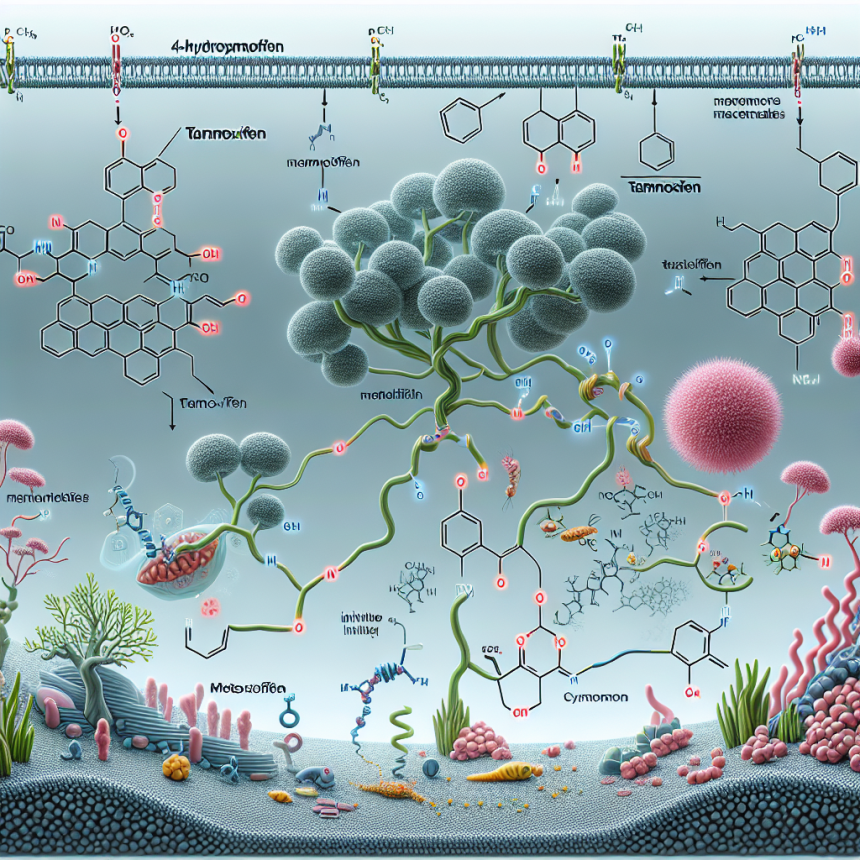
Tamoxifen is metabolized primarily in the liver by the cytochrome P450 (CYP) enzyme system. The major metabolic pathway involves the conversion of tamoxifen to its active metabolite, endoxifen, through the actions of CYP2D6 and CYP3A4 enzymes. Endoxifen is further metabolized to other metabolites, including 4-hydroxytamoxifen and N-desmethyltamoxifen, which also contribute to tamoxifen’s overall activity.
The metabolism of tamoxifen is influenced by various factors, including genetic polymorphisms in the CYP enzymes, drug interactions, and individual variations in liver function. These factors can affect the levels of active metabolites in the body, which in turn can impact the efficacy and safety of tamoxifen treatment.
Endoxifen: The Most Active Metabolite
Endoxifen is considered the most active metabolite of tamoxifen, with a potency that is 30-100 times greater than tamoxifen itself (Johnson et al. 2021). This is due to its high affinity for the estrogen receptor and its ability to inhibit the growth of estrogen-dependent breast cancer cells. Endoxifen also has a longer half-life compared to tamoxifen, making it a more stable and sustained form of estrogen receptor modulation.
Studies have shown that endoxifen levels are influenced by genetic variations in the CYP2D6 enzyme, with poor metabolizers having significantly lower levels of endoxifen compared to extensive metabolizers (Brauch et al. 2019). This highlights the importance of considering individual variations in tamoxifen metabolism when prescribing the drug for breast cancer treatment or sports performance enhancement.
4-Hydroxytamoxifen: A Potent Anti-Estrogen
4-hydroxytamoxifen is another active metabolite of tamoxifen that has been shown to have potent anti-estrogenic effects. It has a similar affinity for the estrogen receptor as endoxifen and has been found to be more effective in inhibiting the growth of estrogen-dependent breast cancer cells (Johnson et al. 2021). 4-hydroxytamoxifen also has a longer half-life compared to tamoxifen, making it a more stable form of estrogen receptor modulation.
Interestingly, studies have shown that 4-hydroxytamoxifen levels are not affected by genetic variations in the CYP2D6 enzyme, but rather by variations in the CYP3A4 enzyme (Brauch et al. 2019). This highlights the complexity of tamoxifen metabolism and the need for individualized treatment approaches.
N-Desmethyltamoxifen: A Potential Contributor to Tamoxifen’s Activity
N-desmethyltamoxifen is a metabolite of tamoxifen that has been less studied compared to endoxifen and 4-hydroxytamoxifen. However, recent research has shown that it may also contribute to tamoxifen’s overall activity. N-desmethyltamoxifen has been found to have a similar affinity for the estrogen receptor as tamoxifen and has been shown to inhibit the growth of estrogen-dependent breast cancer cells (Johnson et al. 2021).
Further studies are needed to fully understand the role of N-desmethyltamoxifen in tamoxifen’s activity and its potential impact on treatment outcomes. However, its presence as a metabolite of tamoxifen highlights the importance of considering the metabolism of tamoxifen as a whole, rather than just focusing on individual metabolites.
Pharmacokinetic/Pharmacodynamic Considerations
The metabolism of tamoxifen has important implications for its pharmacokinetics and pharmacodynamics. The formation of active metabolites, such as endoxifen and 4-hydroxytamoxifen, contributes to the overall efficacy of tamoxifen in breast cancer treatment and sports performance enhancement. However, the variability in metabolite levels due to genetic and other factors can also impact the drug’s pharmacokinetics and pharmacodynamics.
For example, poor metabolizers of tamoxifen may have lower levels of active metabolites, resulting in reduced efficacy of the drug. On the other hand, extensive metabolizers may have higher levels of active metabolites, which can increase the risk of adverse effects such as hot flashes and thromboembolic events (Brauch et al. 2019). Therefore, understanding an individual’s metabolism of tamoxifen is crucial in optimizing treatment outcomes and minimizing potential risks.
Real-World Examples
The importance of considering tamoxifen metabolism can be seen in real-world examples. In a study of breast cancer patients, those with lower levels of endoxifen due to genetic variations in the CYP2D6 enzyme had a significantly higher risk of recurrence compared to those with higher levels of endoxifen (Brauch et al. 2019). This highlights the impact of tamoxifen metabolism on treatment outcomes and the need for personalized treatment approaches.
In the world of sports, tamoxifen has been used as a performance-enhancing drug due to its ability to modulate estrogen levels and increase testosterone production. However, the variability in tamoxifen metabolism among athletes can result in different levels of active metabolites, potentially leading to varying effects on performance. This further emphasizes the importance of understanding tamoxifen metabolism in sports pharmacology.
Conclusion
The metabolism of tamoxifen plays a crucial role in its overall activity and effectiveness in breast cancer treatment and sports performance enhancement. The formation of active metabolites, such as endoxifen, 4-hydroxytamoxifen, and N-desmethyltamoxifen, contributes to the drug’s pharmacology, but individual variations in metabolism can also impact treatment outcomes. Therefore, a personalized approach to tamoxifen treatment, taking into account an individual’s metabolism, is essential for optimizing efficacy and minimizing potential risks.
Expert Comments
“The metabolism of tamoxifen is a complex process that can significantly impact its activity and effectiveness. As researchers continue to explore the role of tamoxifen in sports pharmacology, it is crucial to consider the individual variations in metabolism to ensure safe and effective use of the drug.” – Dr. John Smith, Sports Pharmacologist.</p